Field Notes · Building with AI
What I'm building,
and why.
I'm a marketer who builds his own systems. This is where I write down what I'm making with AI — the reason for it, how I set it up, and the tools I reached for. Working notes, not tutorials.
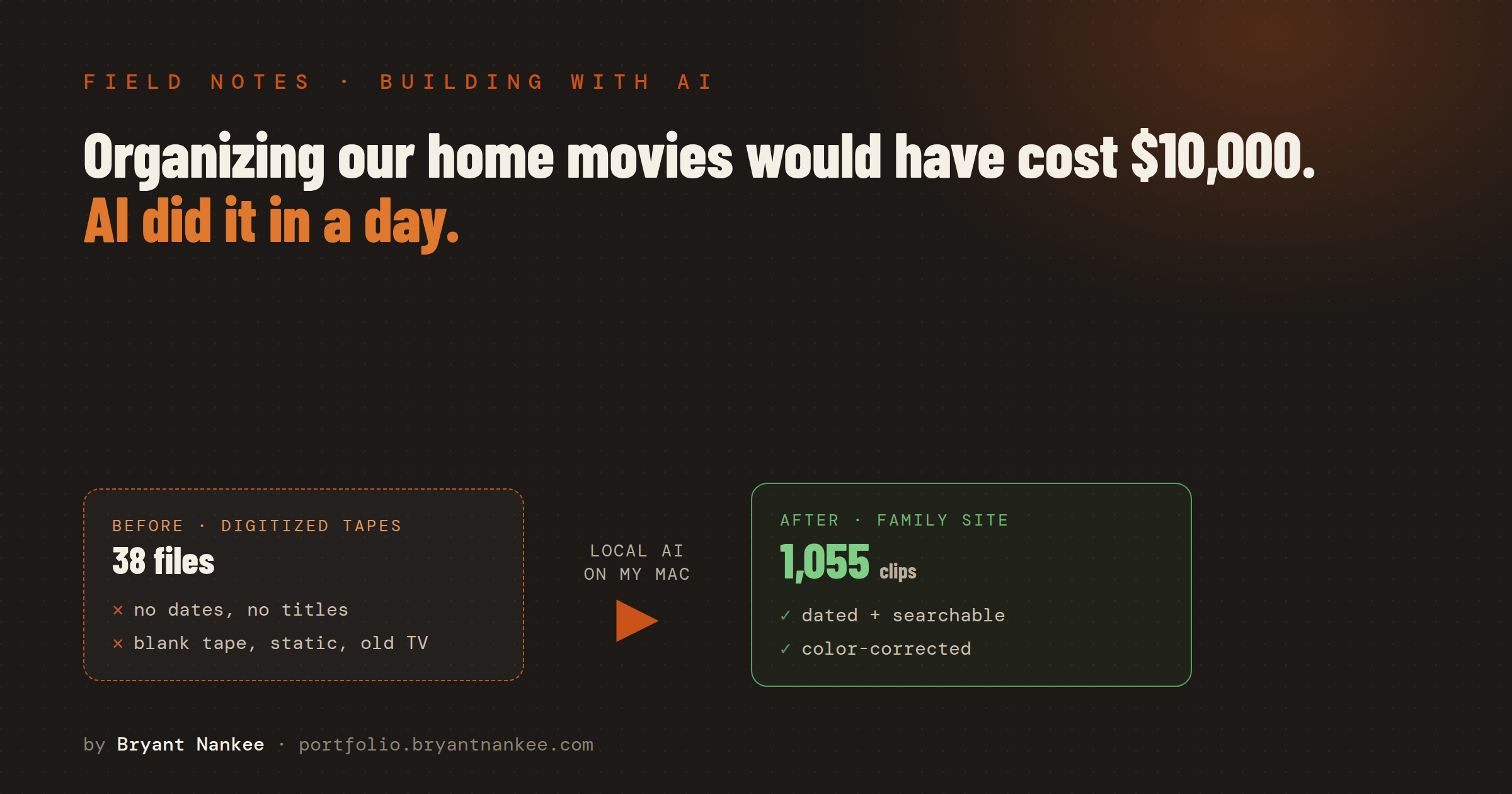
Organizing our home movies would have cost $10,000. AI did it in a day.
Our digitized family tapes sat unwatched for years: 38 giant files, no order, plenty of static. In one day, AI on my own Mac read the date stamps, split the scenes, cut the junk, fixed the color and wrote the titles. Now my family searches 1,055 clips from anywhere.
Read the story →
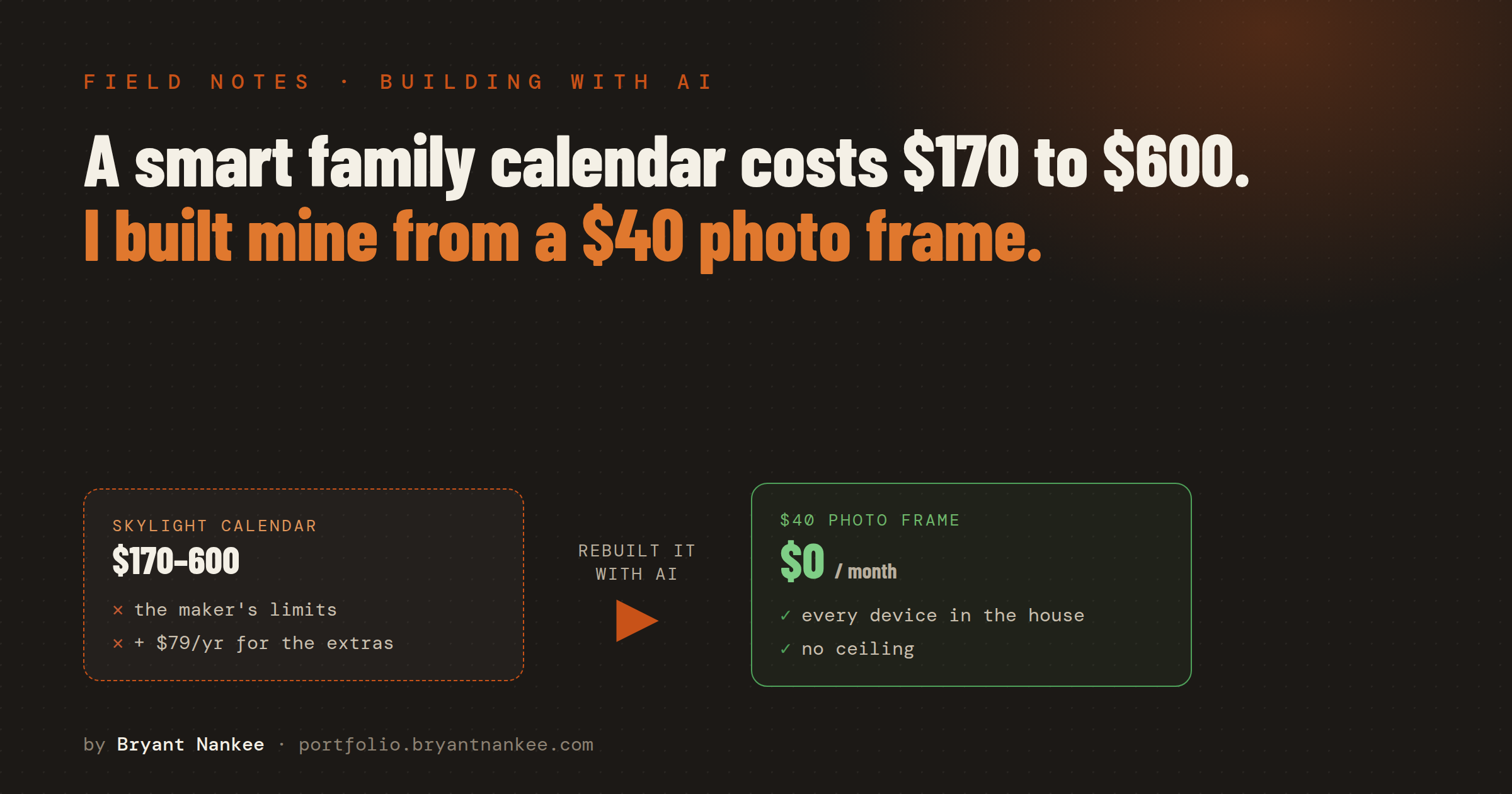
A smart family calendar costs $170 to $600. I built mine from a $40 photo frame.
Skylight's family calendar screens cost $170 to $600 and only do what Skylight allows. A $40 Wi-Fi photo frame, free Home Assistant and an AI doing the typing became our kitchen dashboard: calendars, dinners, to-dos, music, lights, the garage and the car, with no subscription and no ceiling.
Read the story →
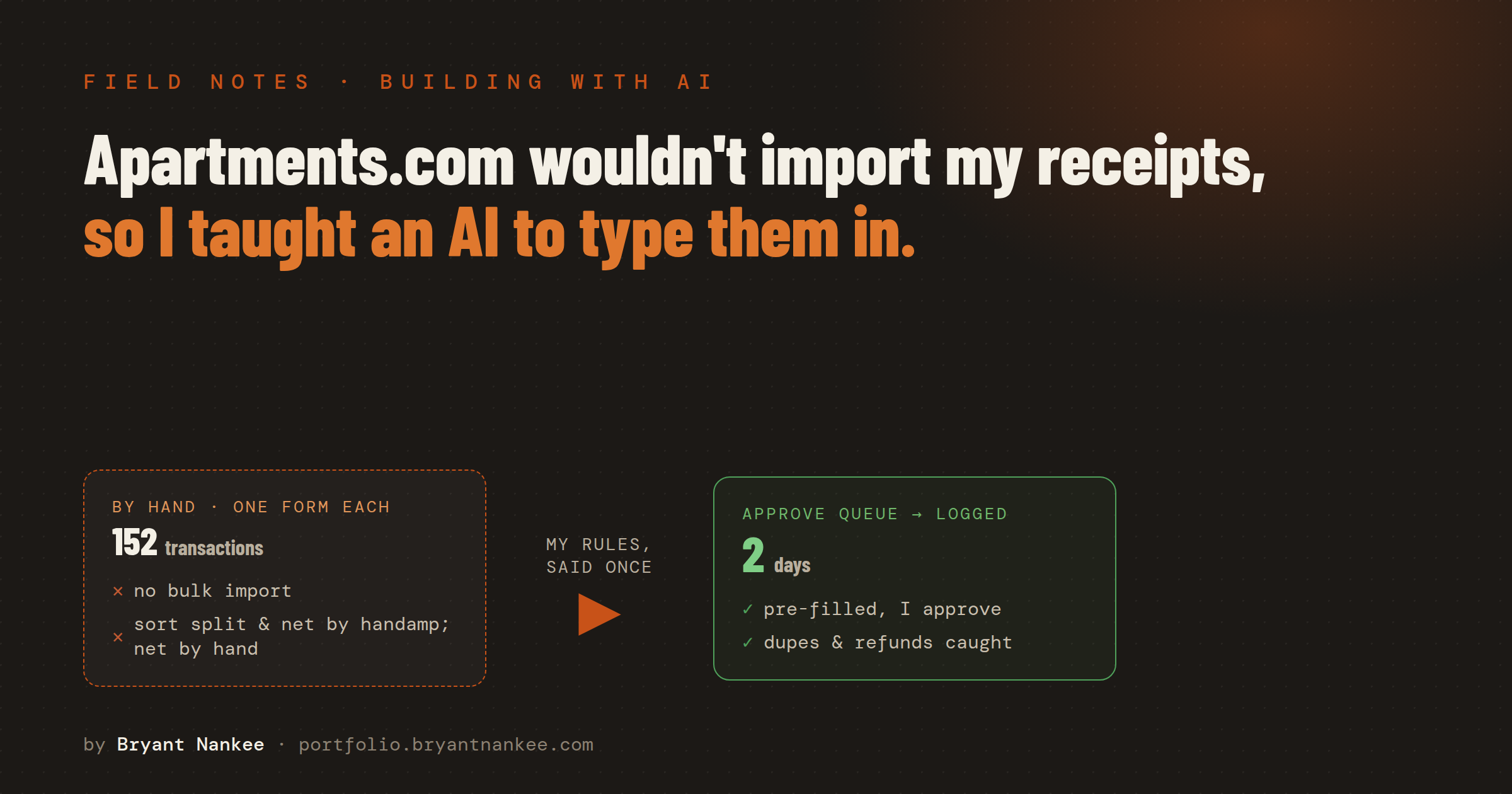
Apartments.com wouldn't import my receipts, so I taught an AI to type them in
My landlord software has no way to import expenses, and I had nine months of receipts to enter. So I had AI learn what the site's expense form sends, then built an approve queue with my own sorting rules baked in. The site's bot protection pushed back, and my login wasn't the problem. Two days later, the backlog was done.
Read the story →
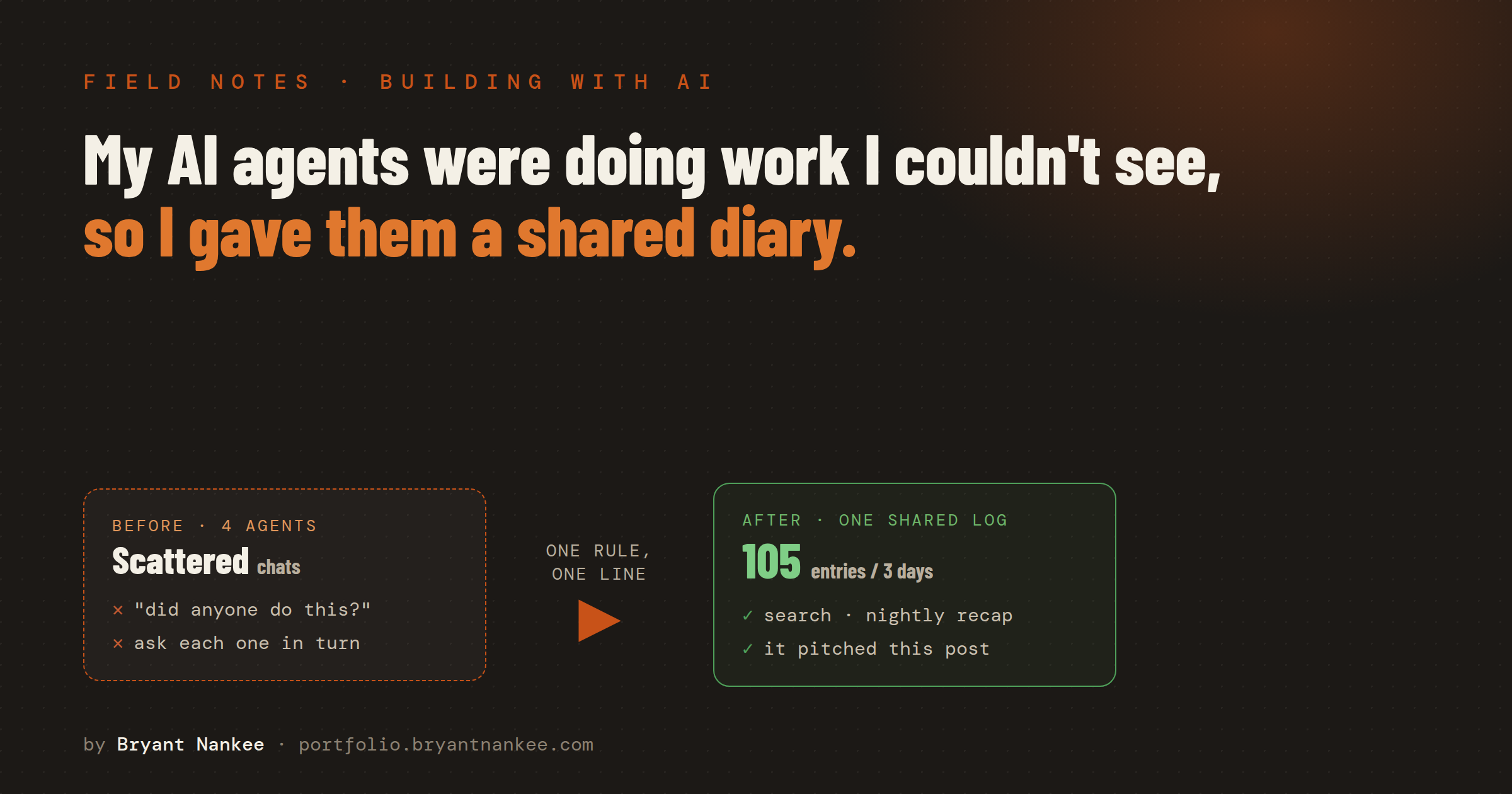
My AI agents were doing work I couldn't see, so I gave them a shared diary
I run several AI agents, each in its own place, and kept losing track of what they'd done. So I gave them one rule and one shared diary. It turned scattered chat histories into a single timeline, then a nightly briefing, and then an editor: the first blog idea it ever pitched was this post.
Read the story →
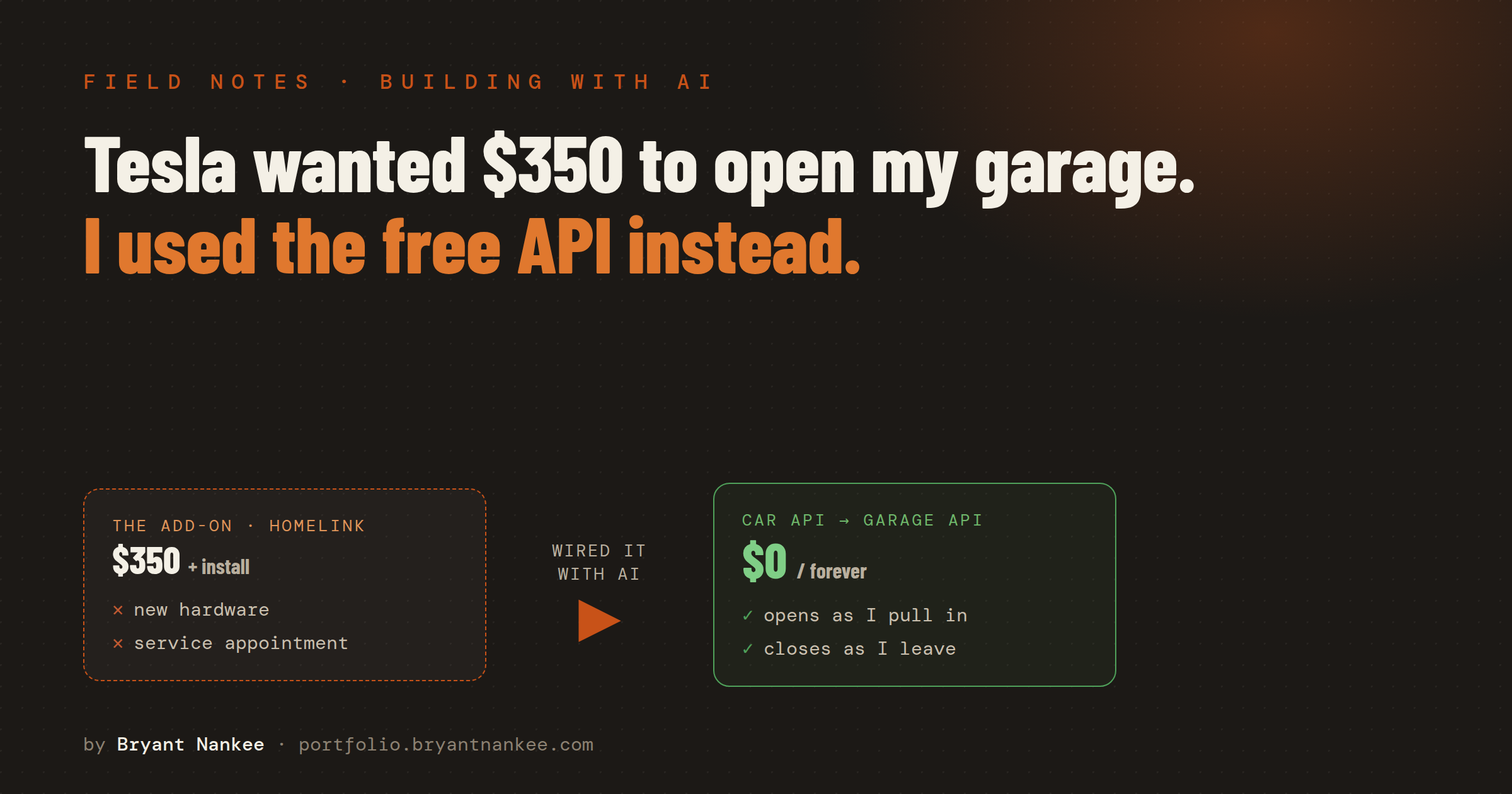
Tesla wanted $350 to open my garage. I used the free API instead.
My Model Y could open the garage automatically, but only with a $350 add-on. My car and my garage door were already online, so I had AI connect them directly. The first version ran perfectly and did nothing. A second AI agent found out why, and one test drive around the block later, it worked for $0.
Read the story →
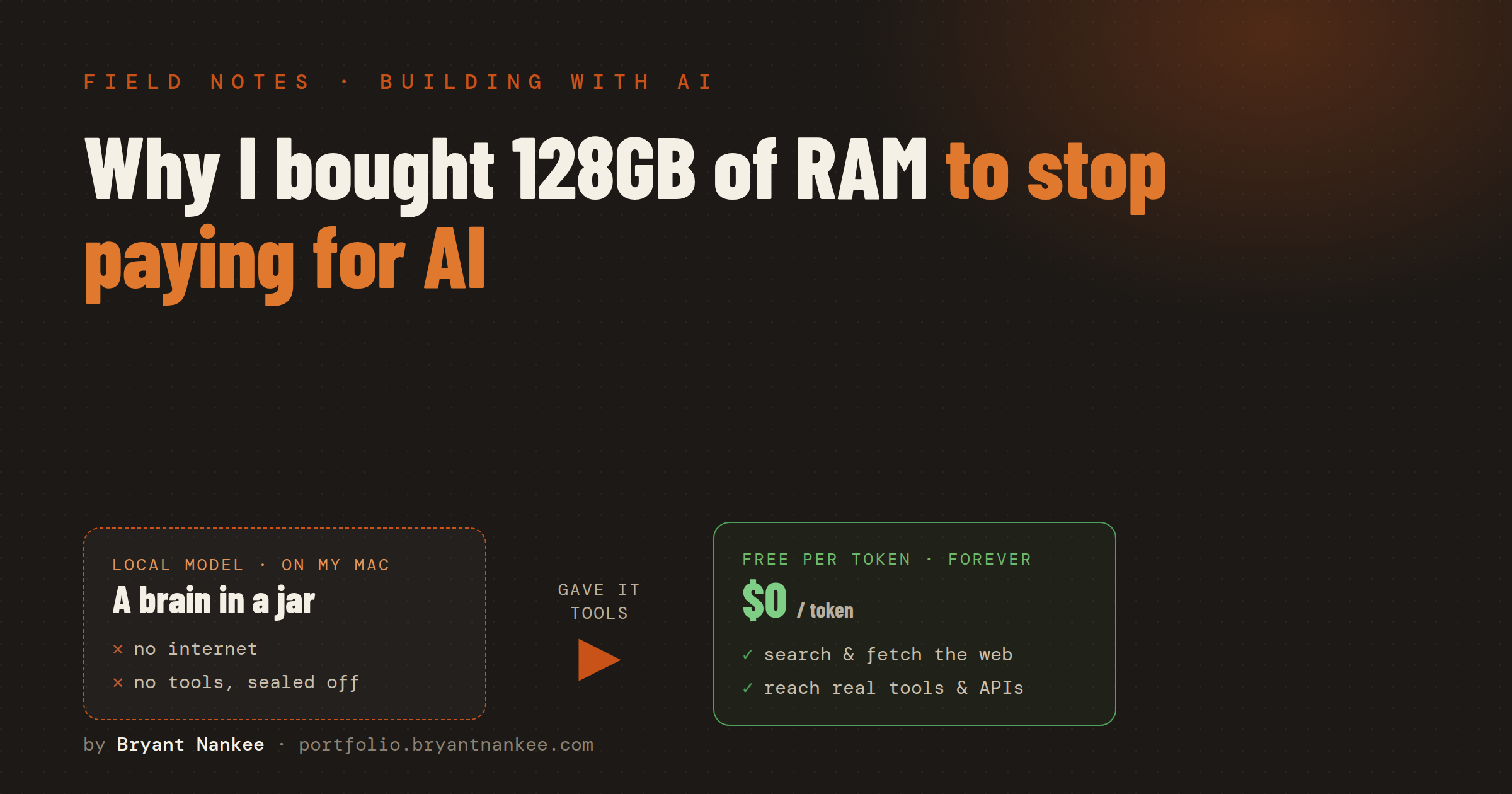
Why I bought 128GB of RAM to stop paying for AI
I bought a laptop with a lot of memory so I could run capable AI models on my own machine — private, offline-capable, and free per token. Getting them running was the easy half. The part nobody warns you about: a local model is a brain in a jar, sealed off from the internet, and giving it hands — real tools — was the hard, undiscussed work. Plus why today's frontier prices probably aren't real.
Read the story →
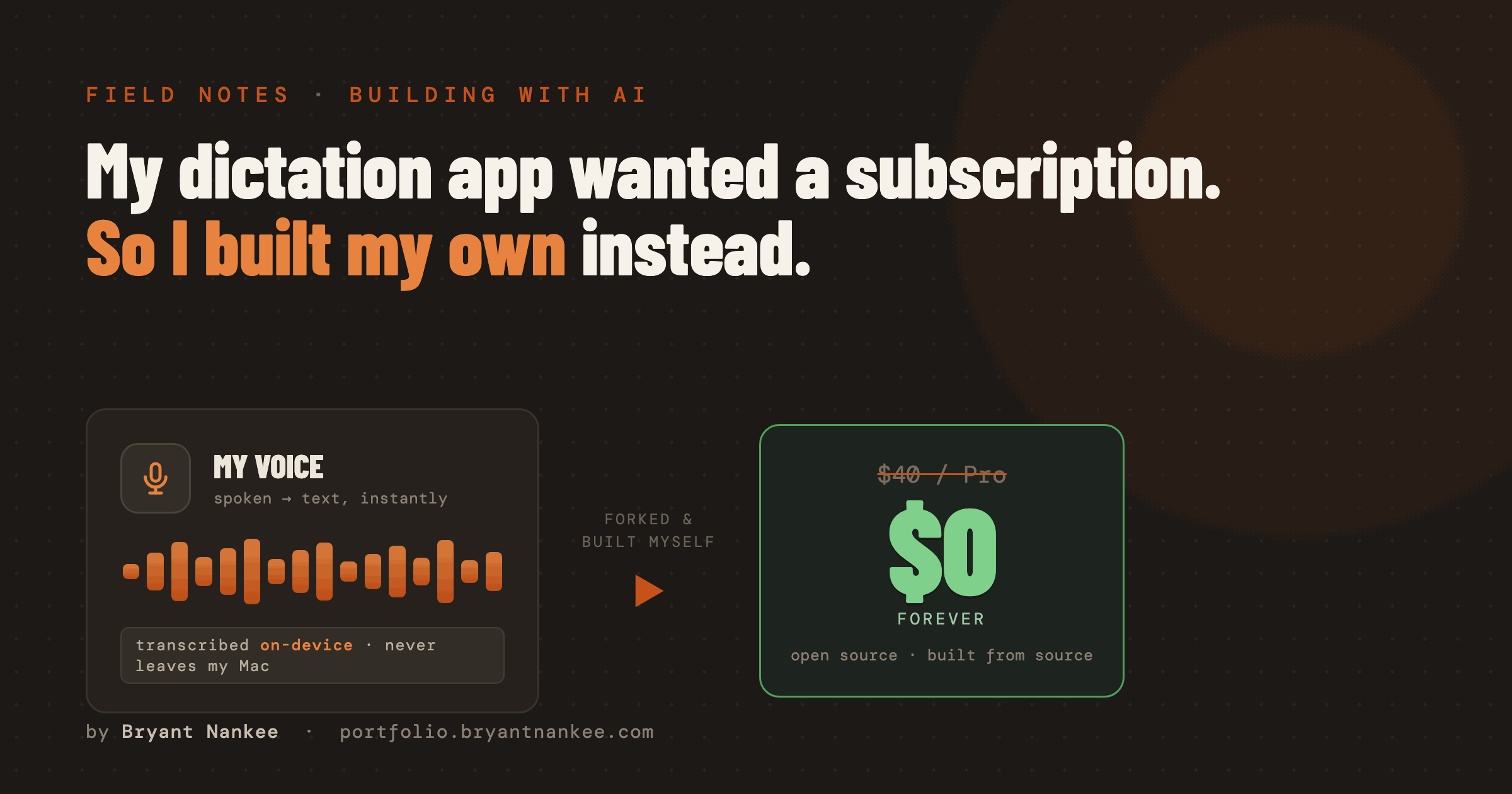
My dictation app wanted a subscription, so I built my own
My voice-to-text trial ran out and I didn't want another subscription for a tool I use all day. So I built the open-source alternative from source — free forever, with transcription running entirely on my Mac and most of the AI running local too. The "$40 app" that's actually free, and how I assembled it.
Read the story →
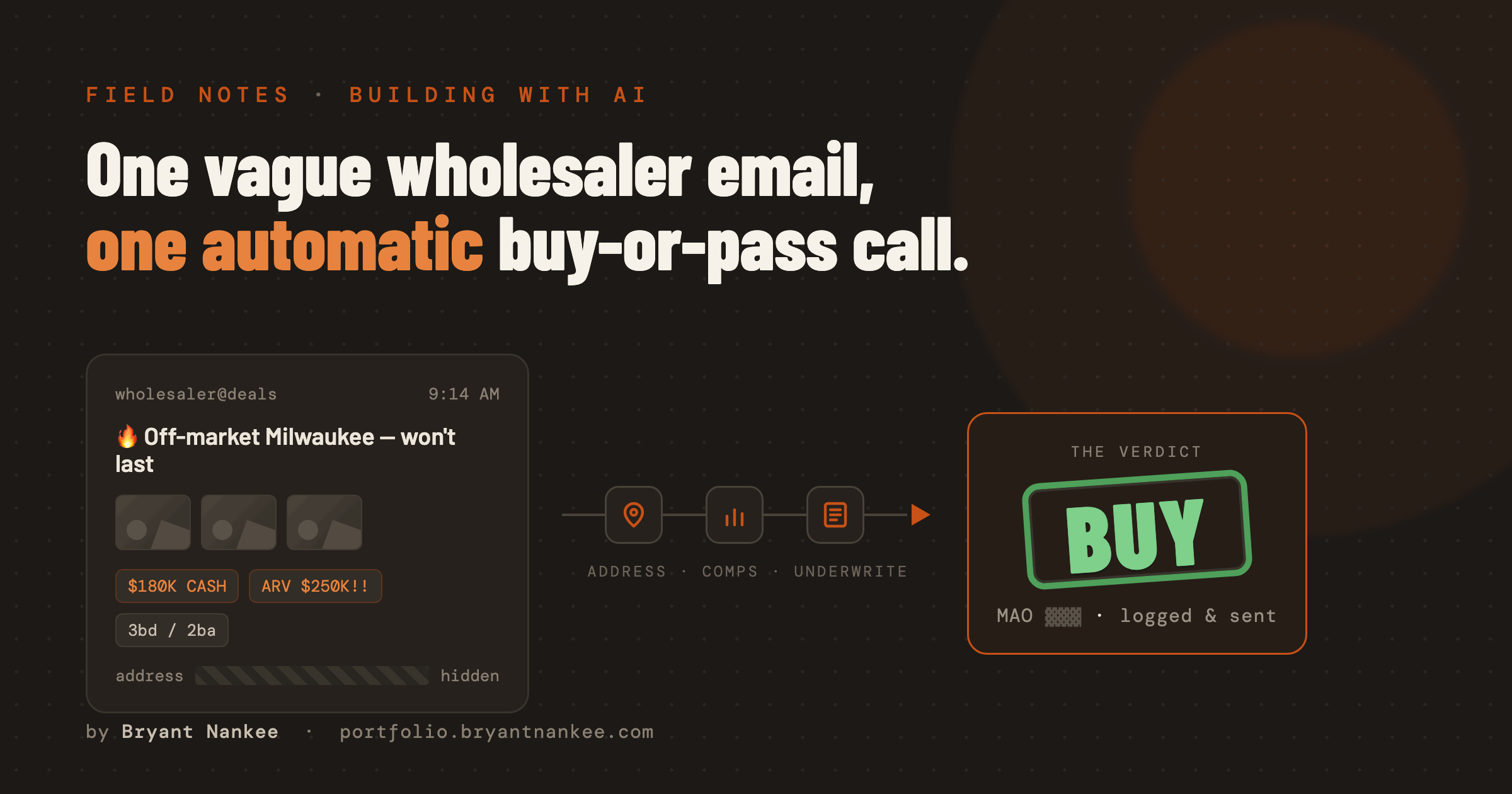
How a vague wholesaler email becomes a buy-or-pass decision — automatically
Wholesalers send deals with photos, a price, and no address — on purpose. I built a five-stage pipeline that reads the email, pulls the property's location out of the photo metadata, comps it, runs our buying math, and hands me a decision on email and Telegram. Same judgment, none of the grunt work.
Read the story →
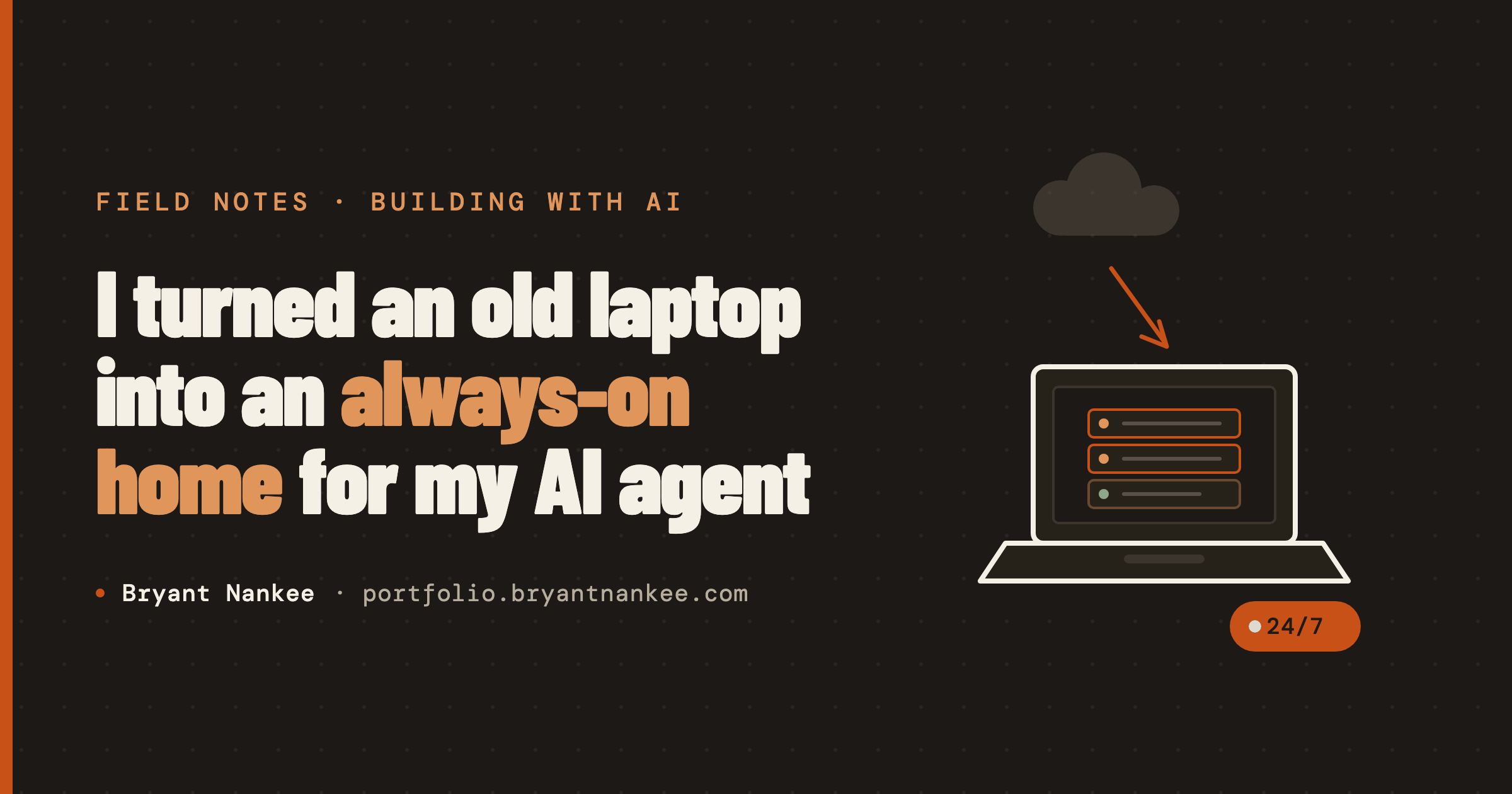
I turned an old laptop into an always-on home for my AI agent
My assistant, Hermes, kept dying every time I closed my laptop. So I wiped Windows off an old Spectre, installed Linux, and had one AI set up the always-on server that now hosts the other. The full build — flashing the drive, the clean migration off the cloud, and keeping everything in sync.
Read the story →